Musical Improvisation at Land’s End / Coin-du-Banc en folie 2023
Musical Improvisation at Land’s End / Coin-du-Banc en folie 2023
In the summer of 2023, the International Institute for Critical Studies in Improvisation (IICSI) held the fifth edition of a bilingual improvised music camp entitled Musical Improvisation at Land’s End / Coin-du-Banc en folie (MILE camp) in Coin-du-Banc, in the Gaspésie region of Québec. From July 15–22, 10 participants (including Erwan Noblet, who provided logistical support as well as participating in the camp) engaged in improvisation workshops led by experienced and award-winning improvising musicians Joane Hétu and Jean Derome, who served as the 2023 artist-facilitators. Participants were also joined by invited guest artists Marianne Trudel (piano) and Inbal Zadok (sitar). The camp was co-organized by Ajay Heble (Director of the International Institute for Critical Studies in Improvisation) and Alain Chalifour, with Heble taking responsibility for curricular, artistic, and research-related matters, and Chalifour taking responsibility for registration, lodging details, and extracurricular activities. IICSI staff and students, especially Erwan Noblet and Sam Boer, provided significant administrative and logistical support.
As the previous edition of MILE camp had taken place in 2019, this edition of MILE camp was long in the making. Between 2020–2022, the camp was postponed due to the COVID-19 pandemic, making this edition a long-awaited event for campers (new and returning) and the IICSI community.
Artist-Facilitators
JEAN DEROME
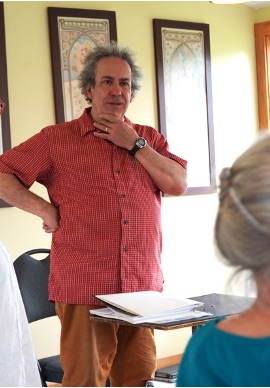
One of the most active and eclectic musicians on the Canadian creative music scene, Jean Derome has managed to earn the recognition of a larger public, a rare feat in that field. Thanks to his large-scale musique actuelle projects (Je me souviens, Canot-camping, Confiture de Gagaku, Résistances), his work as an improviser (with René Lussier, Joane Hétu, Pierre Tanguay, Nicolas Caloia, Malcolm Goldstein), his jazz groups (Évidence, Derome Guilbeault Tanguay Trio) and his music for the screen and the stage, Derome ranks as a major creative force, in Quebec and abroad. He is experienced and innovative on both saxophone and flute, and his unique writing style cannot be mistaken for anyone else’s.
Sensitive and powerful, his music remains inviting in spite of its complex nature. A cofounder of the Ambiances Magnétiques label, Derome has been active for more than 50 years and appears on over 100 albums.
JOANE HÉTU
Born in 1958 in Montreal, where she still lives and works, Joane Hétu is a musician, composer, improviser, conductor, cultural agitator and manager; she was 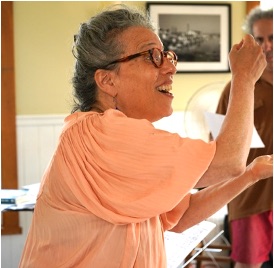 awarded the prestigious Freddie Stone Award in 2006. Her idiosyncratic use of her two main instruments – voice and alto saxophone – combines the former’s flexibility with the latter’s urgency in a unique way.
Hétu is a founding member of the “noisy” a cappella avant-choir JOKER (2012) for which she composed Ou est-ii done ce reve? (2014), Langoureusengagee (2017) and Les lucio/es (2018). Since 1998 she has been, along with Danielle Palardy Roger, the artistic director of Ensemble SuperMusique (a flexible group comprising 6 to 20 musicians); the new music ensemble specializes in presenting (and in most cases, premiering) graphic score-based compositions as well as group improvisations conducted with different sets of specific hand gestures.
Hétu’s passion for new music, “musique actuelle”, and improvisation has led her to co-host – with fellow musicians Jean Derome and Lori Freedman – Montreal’s weekly concert series Mercredimusics since 2001. ln more recent years, she has composed for the Ensemble SuperMusique, Quatuor Bozzini, Now Orchestra, Quasar quatuor de saxophones, Instruments of Happiness. Hétu is also involved with Jean Derome in their magic duo Nous perçons les oreilles, and in Castor et compagnie, a quintet devoted to “dirty love songs”, and she has presented her music for more than 40 years now in festivals and concert series, touring both Canada and abroad.
A founding member of the label Ambiances Magnétiques and later of the record company DAME (Distributions Ambiances Magnetiques Etcetera, 1991 ), she has been co-artistic director of both Productions SuperMusique (since 1980) and more recently of Le Vivier, carrefour des musiques nouvelles. Her discography features more than fifty albums.
Workshops
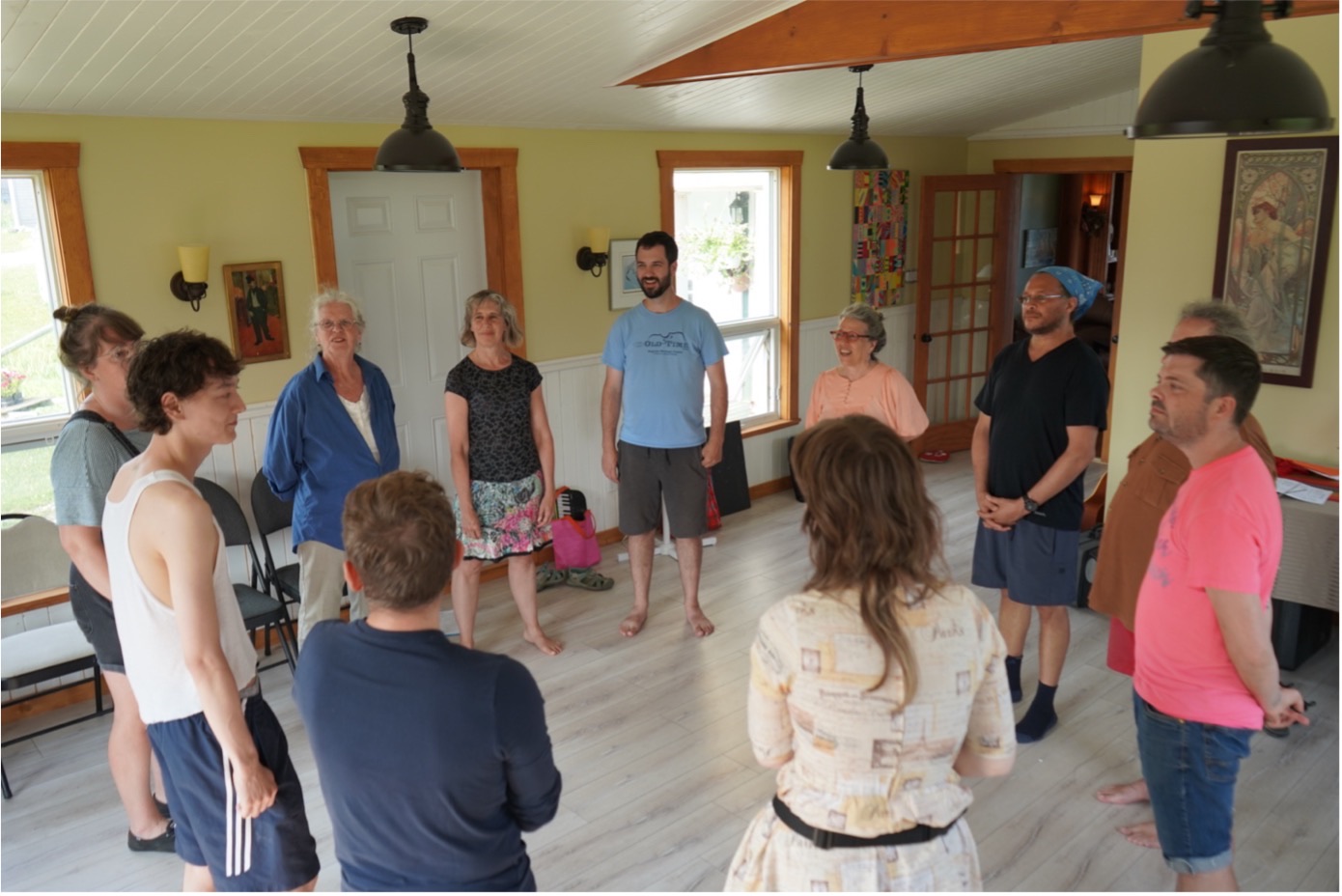
Throughout the week, participants took part in workshops and improvisation-focused games and exercises on a range of topics. Emphasis was placed on ensemble-based improvisation as well as small group playing (duos and trios). Guest-led sessions by Marianne Trudel (solo improvisation) and Inbal Zadok (raga and improvisation in Indian classical music) rounde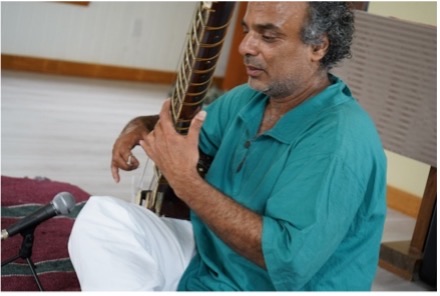 d out the curriculum. The workshops provided participants with hands-on experience with the practice of improvisation, and helped develop musicianship, confidence, listening, and collaboration skills.
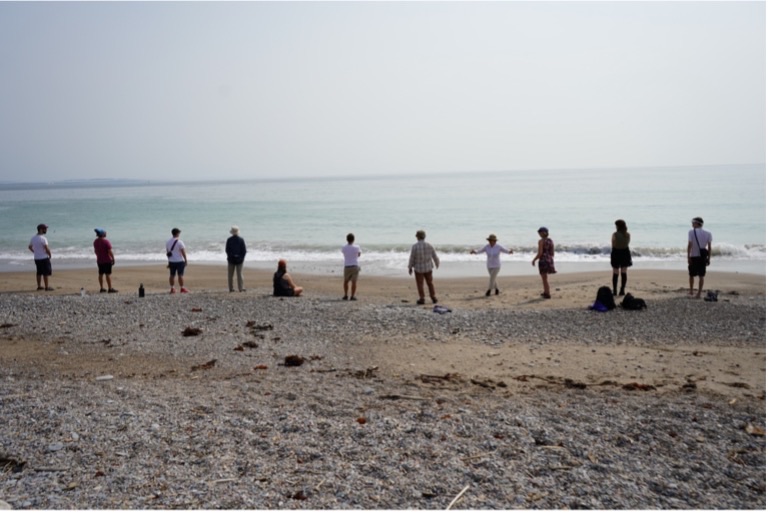
Workshops took place in several locations. Most of the workshops happened in the Musée culturel de Coin-du-Banc, which was also the site of the week’s public concerts. This historic site, housed on the site of the decommissioned St. Luke’s Anglican church, served for its fifth year as a place of encounter between participants and the local community. Other worshops happened at Alain Chalifour’s artist house (where participants were lodged) and outdoors on the Coin-du-Banc beach.
Participants
Participants from across a range of ages and levels of expertise attended this year’s edition of the camp. The 10 participants were diverse, varying in language, age, gender, cultural background, and level of musical experience. Participants ranged in age from early 20s to 60+; lived in a variety of areas of Canada between Ontario to Newfoundland; and came from a wide variety of musical and cultural backgrounds, whether they are studying music at a university level, teaching music at a high school, performing music professionally, or simply playing music for the joy of it. Most campers had a good amount of improvising experience. Compared to previous editions of the camp, the majority of participants had significant experience with their instrument(s) in professional or semi-professional capacities; this aligned with IICSI’s goal of making the camp more specifically tailored for those with existing musical skills, without defining this qualification too rigidly. The impressive musicality of this g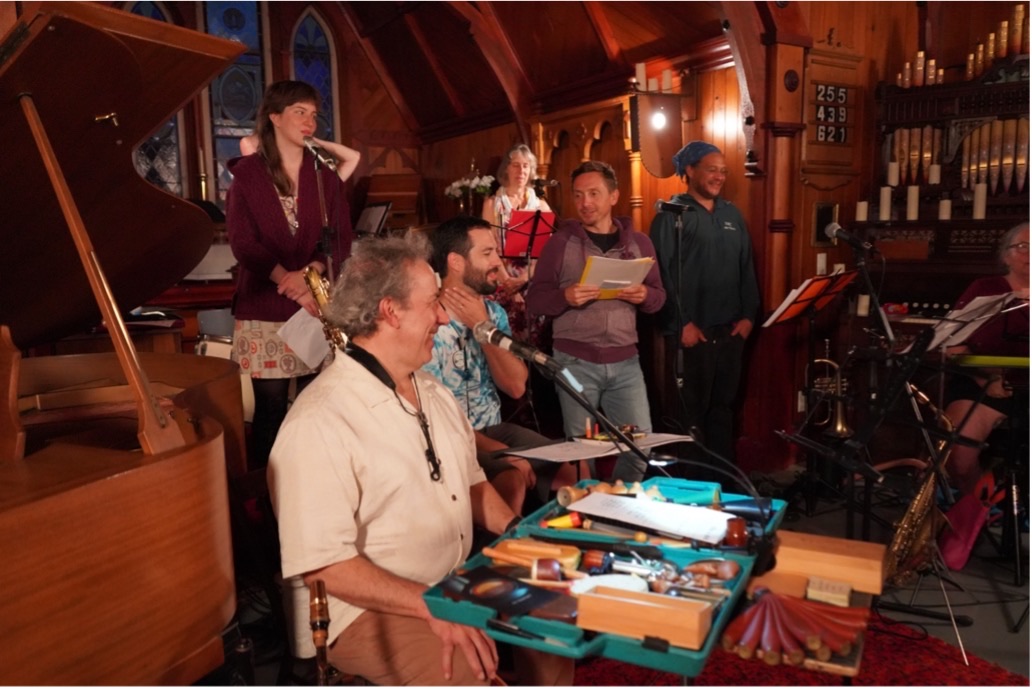 roup was highlighted in the grand finale performance. As Ajay Heble reflected at the end of the week, “we asked for some level of musical experience, and it showed this year.”
This year boasted the greatest number of returning participants or alumni (five) who had attended at least one other edition. This tendency for participants to return to MILE camp not only speaks to the personal impact of the camp and the community that continues to form around it, but also allows us to track the creative growth of individual participants, helping us study the long-term effect of this camp on returning participants.
While participants spoke different languages, workshops were held in both English and French, often interchanging between these languages. There was also a significant amount of musical diversity, as participants were comfortable performing in a range of different genres and played a variety of musical instruments including saxophones, trumpet, drum kit, pianos (acoustic and digital), guitar, found sounds (i.e., laptop), synthesizers, voice (including throat singing, speaking, and vocal noise-making), and a wide variety of small percussive and melodic instruments (e.g., shakers, tambourines, whistles). Participants also used movement during certain improvisations. While some participants stuck to their main instrument for most activities, many took the opportunity to experiment with other available instruments. Participants also created sound with several small instruments provided by Jean Derome and Joane Hétu.
Staff
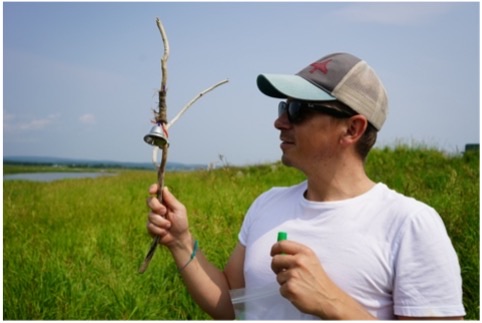
Erwan Noblet, a Ph.D. student in Critical Studies in Improvisation at the University of Guelph, was the camp assistant this year, helping with the logistics of the camp and assisting with the interviews and French translation. As an improvising vocalist, he also participated in the workshops and experimented with Joanne and Jean’s conducting method, taking this unique chance to connect more closely with all the participants. Erwan describes his experience as “fulfilling, especially in terms of exploring new ways to facilitate free improvisation workshops and meet creative, risk-taking and friendly musicians.”
Sam Boer, a Communication and Research Assistant for IICSI, was MILE camp’s videographer, photographer, and sound technician this year. Whil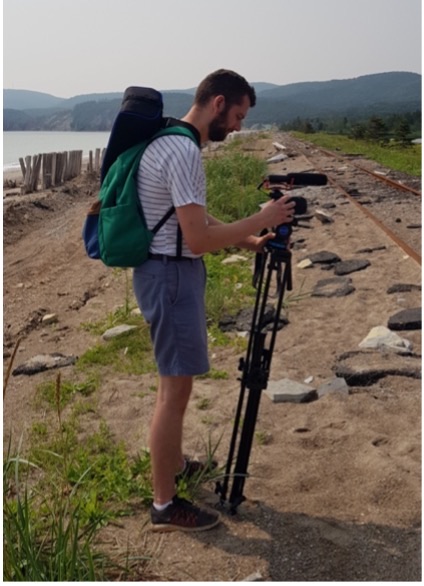 e designated videographers have been hired to film the happenings at the camp for previous editions, this was the first year that the videographer also helped with other logistical elements of the camp, including setting up and mixing sound during all rehearsals and performances. This is partially due to the fact that this was the first edition where the artist-facilitators wished to amplify all camp activities that took place in the Musée culturel de Coin-du-Banc, allowing participants to better hear one another while performing, and helping the audience hear the musicians during the concerts. In the future, it may be worthwhile delineating these roles, as alternating between supporting live sound and video/photo capture proved challenging at times. However, taking on these roles was also a significant learning opportunity, and Sam notes that, “just as the participants were pushing themselves to improvise musically, I was able to push myself to improvise as a videographer and sound engineer.”
Performances
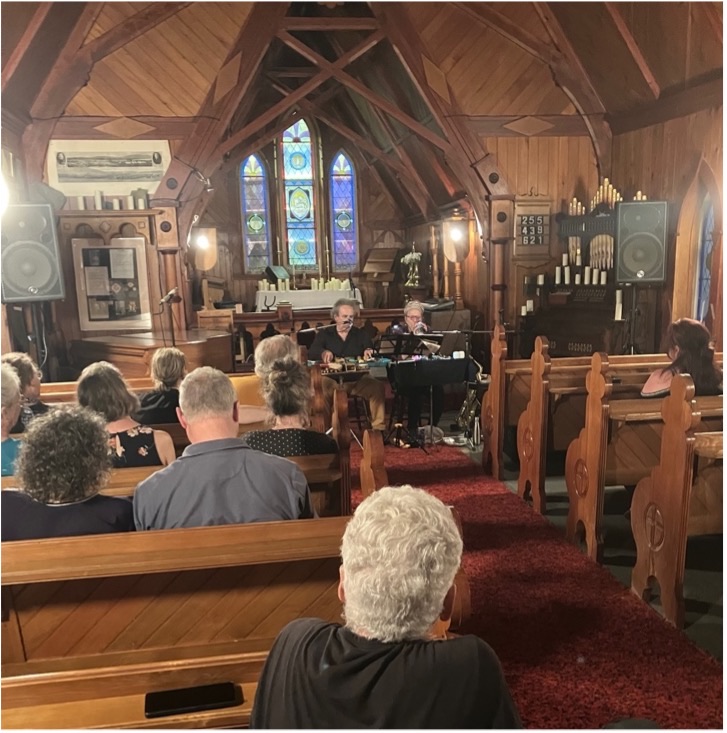
This year’s MILE camp facilitated two public performances, both of which took place at the Musée culturel de Coin-du-Banc / Corner of the Beach Cultural Museum. The first was an evening performance by Nous perçons les oreilles (Jean Derome and Joane Hétu). For this concert, MILE camp’s artist-facilitators performed works spanning their careers for a significant, receptive audience that included locals and visitors to the region.
After an intensive week of workshops, this edition of MILE camp culminated with a grand finale performance at the Musée given by the camp participants under the direction of Jean Derome and Joane Hétu. Though attendance was not robust, the concert was very well received.
Participants also engaged in spontaneous, improvised music-making in the spaces between workshops and in the evenings, including a song-sharing circle on the final night. These impromptu musical activities allowed participants to express themselves musically outside of the direction of the formal workshops and final performance.
Partnerships
MILE developed and built relationships with several local creative, cultural, and community groups. These partnerships continue to be key to the ongoing success of the project.
Foremost among our partners is La société historique de Coin-du-Banc / Corner of the Beach Historical Society, which supported the camp by offering the museum as a venue not only for our public performances but also for our workshops and rehearsals. The excellent acoustics of the venue make for an ideal listening environment, and we were additionally grateful for permission to use the museum’s audio-visual equipment, which was used extensively for this edition of MILE camp. Special thanks to Gladys Jean and to Alex (Sunny) Vibert for their enthusiastic support in promoting the activities of the camp and tending to this special location.
La Ville de Percé provided a cash contribution and in-kind promotional support through physical postering and digital advertising (including on their website). The MRC du Rocher-Percé also provided generous financial support for this edition of MILE camp.
We also continue to be hugely grateful to the Musagetes Foundation for their financial support of MILE camp.
Impacts
Key impacts: musical mentorship, collaboration across difference, inter-cultural exchange, arts-based community making, creative self-expression and discovery.
“I was much more confined to ideas of chords and keys and things like that before coming here . . . now, I can see the piano as a percussion instrument, which is big for me. I’d never really closed my eyes and banged the keys and actually tried to make something I liked out of that. It was cool being able to expand my horizons.” –Lukas, camp participant
Participants benefited from the opportunity to learn the practice of improvisation from world-class professional improvising musicians, developing musicia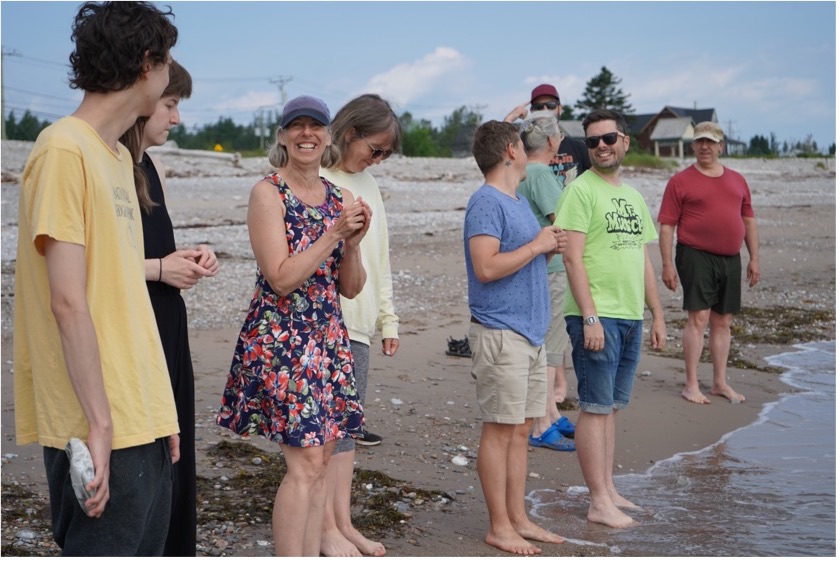 nship and confidence by taking musical risks in a nurturing and inclusive environment. There was also a mentorship component, as some participants sought encouragement and guidance about professional development as emerging musicians.
This year’s edition of the camp included a particularly rigorous schedule, as many noted during our reflection circle at the end of the week. The number of hours devoted to workshops and rehearsals made the week more demanding than some previous editions of the camp, but many noted that this intensity also led to significant musical and creative development.
Jean Derome and Joane Hétu led the camp collaboratively, with the goal of sharing a range of improvisational tools with participants. “The idea for us,” Jean explained, “was to bring you a whole set of tools and concepts for what can happen in an improvisational setting. Here you learned that you can be out of phase, have different me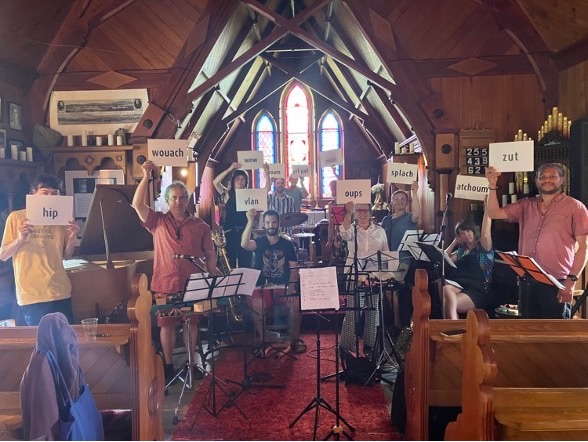 lodies going at the same time, have no form, have just an image . . . that inspiration will come from many places and the results can be very different.” There was a great report between Jean and Joane and the camp participants, which led to fruitful collaboration throughout the week. As participant Véronique explained to Jean and Joane: “You made us feel comfortable. It wasn’t hard at all to talk with you and share.”
As an example of some of the improvisational tools shared with participants during the camp, Jean and Joane taught the participants a set of gestures that they used to conduct the group. These gestures were used during the performance and provided a common language for many of the improvisational excercises. Several participants had the opportunity to try leading the group with these gestures as well.
“I really liked how much the camp opened up my eyes to new sounds and new ways to listen to other people and respond to them” –Jamie, camp participant
Many participants noted the beauty of the Coin-du-Banc, and how inspiring it was to explore this part of the world. Between workshops that took place along the beach and a day trip into the town of Perce, participants were able to find inspiration in this region in all sorts of ways throughout the week (including diving into the refreshing ocean!).
Workshops built the confidence of participants as performers, and the camp provided an opportunity for participants to collaborate across linguistic and cultural differences. As participant Anna noted: “I was improvising vocally, and I was realizing how much everything I do is often premediated. I don’t usually do things like that. So I think [this camp] will help me be more present as I’m making music or singing. It’s a good new practice.” This year’s age diversity also afforded many valuable opportunities for intergenerational exchange. Participants also learned about the local history of this unique region of Québec.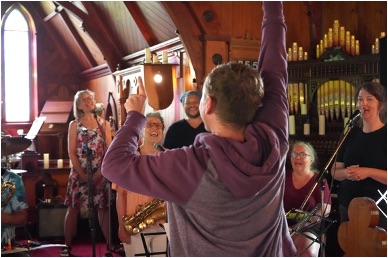
In building and developing relationships with local creative, cultural, and community groups, MILE contributed to the growth of a cultural hub and to the strength and resilience of the local community around Coin-du-Banc. This work helps to strengthen the local tourism economy and alleviate the problems associated with an under-resourced area, especially in the wake of the COVID-19 pandemic. In addition, bilingual events support inter-linguistic exchange within the local community, further enhancing community cohesion.
This year’s edition of MILE camp also generated some local press attention. Ajay Heble was interviewed by CBC Quebec, and Alain Chalifour gave an interview about the camp to local station TVCGR.
Research Outcomes
“It’s been really nice. It was nice to see some familiar faces, and be back here. I appreciate a lot of the music and sound that we made.” – Cassondra
As in previous editions, research data was gathered through participant observation; open-ended semi-structured interviews (some in English, some in French) with the participants and artist-facilitators; and video documentation of workshops, lecture-demonstrations, and performances.
Such data gathered from the first four years of MILE camp, have resulted in articles, book chapters, applied improvisational pedagogies, and art-based community making. The research outcomes of this fifth edition will no doubt yield some of the same results. We look forward to seeing how this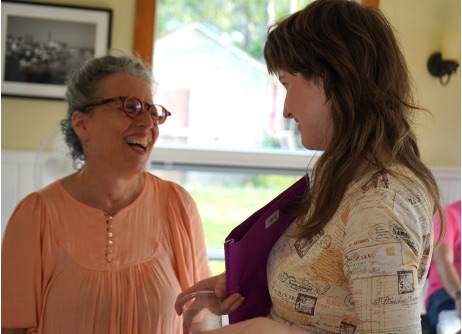 research will manifest within academic settings and throughout different communities. As many of this year’s participants are teachers, it’s particularly exciting to think of how Jean and Joane’s distinctive pedagogical approach to this year’s camp may be applied to our participants’ work as educators.
Another exciting research outcome of this edition was being able to track the progress of returning participants. As noted above, there were five returning camp alumni this year, indicating not only the success of the camp for these individuals, but also that MILE can provide meaningful, long-term growth support for participants. It was particularly impactful to observe and interview Lukas this year, who had first participated in the 2018 edition. His musical development had progressed considerably, and he reflected on the fact that the 2018 MILE camp had encouraged him to push his own musical boundaries and explore the piano in new ways. Now, as an Electroacoustic Studies student at Concordia University, Lukas is applying these principles in a post-secondary setting, and he felt compelled to return to MILE camp to further develop his improvisational skills.
Summary and Next Steps
“Some real, amazing music has resulted and I have no doubt that some of these relationships will continue after this week.” – Ajay Heble
This fifth edition of MILE cemented the camp as an important annual event for improvised music in Canada. As with previous years, the documented responses of participants and musicians have all been very positive, and there is a strong des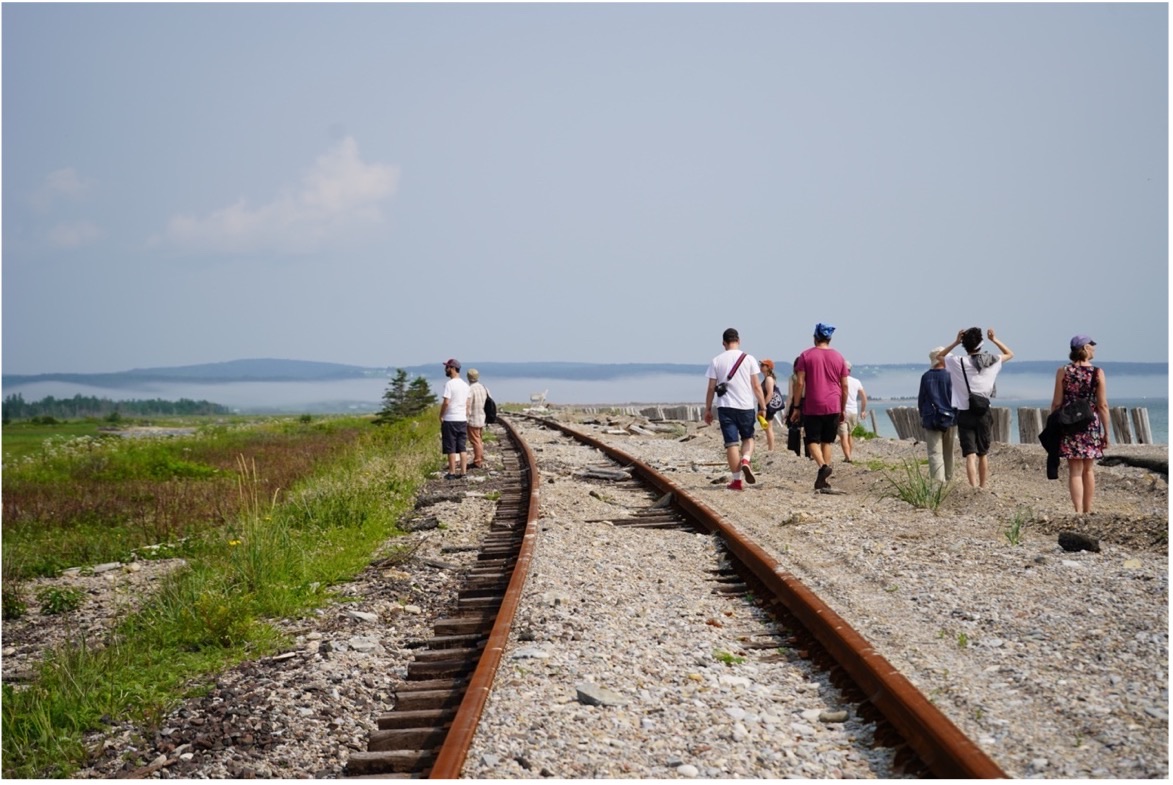 re to go forward with another iteration of the camp next year.
The objectives for this project were to connect members of diverse communities with profound experiences of improvisation and to foster collaboration, relationships, and understanding between people from urban and rural backgrounds. The camp succeeded in contributing to participants’ creativity and sense of confidence, well-being, and connection to community. Together, participants explored new and innovative approaches to creating improvised music, testing the inner traditions and the outer limits of the music. The group created, arranged, rehearsed, performed, improvised, discussed, and learned together.
The participants were all highly engaged and committed, and the level of instruction was excellent. This year’s camp also served a broad range of participants in terms of age, and we experienced a significant dynamic of intergenerational creativity and exchange.
This year’s edition of MILE proved that the camp is vital as a truly free space for exploration and self-expression. Participants noted how liberating it was to be exactly who they are during the camp, being able to take risks and speak they minds, and eschew the typical limitations of musical performance conventions. This should be fostered for all future editions.
With five successful editions of the camp under our belt, MILE camp has a well-defined character, a proven track record, and a sustainable financial model, as well as substantial buy-in from partner organizations. We look forward to returning for a sixth edition in 2024, implementing some new ideas outlined in this report while maintaining the elements of MILE camp that make it so special.
Appendix
MILE Camp Cost Sheet_English_2024_FINAL
MILE Camp Cost Sheet_Francais_2024_COMPLETE


