
Presenter & Performer Bios – Guelph Jazz Festival Colloquium 2026
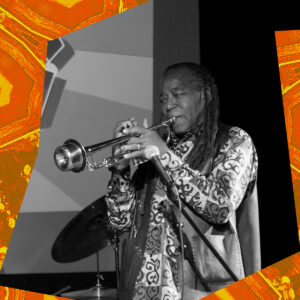 Ahmed Abdullah
Ahmed Abdullah (trumpeter, composer, educator, and author) is one of the central figures in 21st-century Brooklyn Jazz. He joined the Sun Ra Arkestra in 1975, touring, recording, and traveling extensively until 1997. His recently published (2023) memoir, A Strange Celestial Road: My Time in the Sun Ra Arkestra, recounts that experience and many more he has had in the music. He recently phoenixed from the NYC Dept of Education after 20 years of service as a music teacher at Brooklyn’s PS 3 and is also curator emeritus from his 25-year position as Music Director of Sistas’ Place in Bedford-Stuyvesant, Brooklyn. He is currently an adjunct professor at the acclaimed New School Jazz Program, where he has been teaching the music and philosophy of Sun Ra since 2002. He continues to lead his own ensemble, Diaspora (Dispersions of the Spirit of Ra), and he is working on writing the second part of his life story.
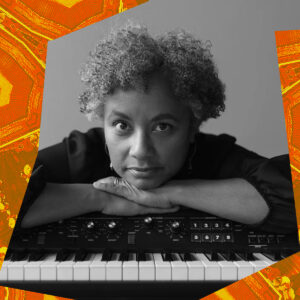 Keisha Bell
Keisha Bell is a musician, composer, and scholar whose research interests lie at the intersection of black studies, ethnomusicology, and post-colonial thought. After a 20-year private teaching practice, she returned to university to earn a Masters’ in composition. The pieces for piano trio were inspired by the poem “Meditation on Yellow” by Jamaican poet laureate Olive Senior, and she recorded and released them on the album Caribbean Yellow in 2022. She is currently a PhD candidate in music at York University, and the focus of her research is the archive of Toronto drummer Archie Alleyne.
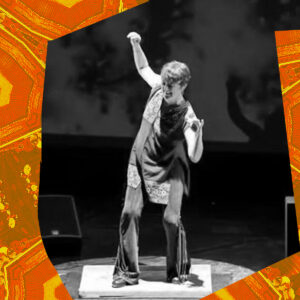 Heather Cornell
Heather Cornell is a Canadian tap dancer (NYC based from 1981–2021) who lives in the intersection of music, dance, and theatre. She is Artistic Director and co-creator of Manhattan Tap, an international touring music/dance company that helped to define the rhythm tap renaissance in the 80’s and 90’s. Ms. Cornell is known for her collaborations with acclaimed musicians, most notably with jazz bassist, Ray Brown. She created CanTap, a company celebrating Canadian artists; Walk to the Beat, a community-based festival of improvisational music and dance, and the music/dance Lab TapMotif, which ran for 8 years on the island of Lefkada in Greece, and presently is on faculty at ImprovJazz Fest in Vamvakou, Greece. She has created numerous solo shows that toured internationally, including Finding Synesthesia (with Andy Milne, commissioned by the London Jazz Festival), Making Music Dance (with Andy Algire), and Conversations (commissioned by Capilano University). She has choreographed for Broadway and numerous shows and companies worldwide and has been featured internationally at jazz, music festivals, theatres, clubs, TV, and annual live radio (WNYC, 1993–96). Her curiosity has led her to the Critical Studies in Improvisation PhD program, in an effort to discover, anew, what this spontaneous life has been all about.
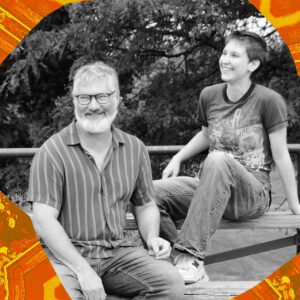 David Dacks
David Dacks (he/him) is a Toronto-based advocate of creative music in all its forms. He was a programmer and host at CIUT-FM for 25 years, produced four documentaries for CBC Radio and programmed two channels for Exclaim! Radio. He is currently Executive Director of Labyrinth Music Workshop Ontario and was previously Artistic then Executive Director of renowned experimental venue the Music Gallery from 2011–23. Previously, David was an editor of Exclaim Magazine’s coverage of jazz, R&B, experimental music, reggae, and music from around the world. His has also written for Spinner.com, The Grid, Weird Canada, Critical Studies in Improvisation, BlogTO, Paste Magazine, The African Drum and Musicworks. As a musician and DJ, he recorded eight albums featuring wild combinations of electronics with dub, cumbia, and improvised elements, and ran a record label.
 Sydney Dacks
Sydney Dacks (they/them) is a Toronto and Montreal-based student and up-and-coming video game developer who has just completed a Bachelor’s degree in Computer Science and Sociology at McGill University. Sydney is passionate about investigating the creative potential of the computer and about using technology for storytelling, and helping artists to execute their creative vision. They have built six video games in Unity and have another two under development. They have participated in several hackathons and Game Jams, winning the best VR Game award in the 2024 McGameJam. They have designed and taught curriculum for childhood coding education, centred on fun and engagement while providing IT support. Sydney is also interested in and has conducted responsible AI research with a focus on algorithmic fairness and data privacy.
LuFuki
LuFuki Ismaeel Dhul-Qarnayn is a composer, guitarist, and cultural curator in Detroit whose art practice centers around Black ancestral legacy. LuFuki’s current projects include XRoads, an exhibit on the history of Black Muslims in Jazz, and Autophysiopsychic Millennium, a research music collective exploring the philosophy and music methodology of Dr. Yusef Lateef, which was featured at Carnegie Hall. LuFuki holds a Master’s degree from Wayne State University in Near Eastern Studies, specializing in Arabic, a Bachelor’s degree from the University of Michigan in Africana Studies and History, and is pursuing his PhD in Practical Theology at Claremont School of Theology.
 kat estacio
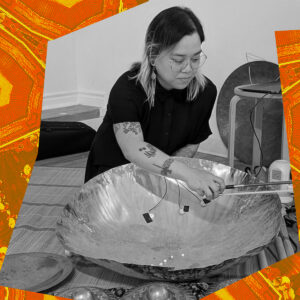
kat estacio (they/them) is an interdisciplinary artist-researcher that creates multisensory performances and immersive new media installations. Anchoring percussive soundmaking and improvisation on kulintang, they expand the experience of sound with land-based tending, embodied movement, and relational ways of being. They are pursuing their MFA in Interdisciplinary Art, Media & Design at OCAD University, investigating the intersections of diasporic identity, disembodiment, and disability to build a tangible body-based vocabulary that bridges archipelagic narratives with cultural and ancestral memory. kat collaborates with their queer Filipinx-Canadian band, Pantayo, and is a Research Assistant at Asiatic Itineraries (Asian Diasporic Media Research Centre). They come from taga-ilog/Tagalog ancestry and is based in Tsí Tkaròn:to.
 Gordon Grdina
Gordon Grdina is a Juno Award-winning oud/guitarist whose career has spanned continents, decades, and constant genre exploration throughout avant-garde jazz, free form improvisation, contemporary indie rock, and Arabic music. His singular approach to his instruments has earned him recognition from the highest ranks of the jazz and improvised music world. Grdina has performed and collaborated with a wide array of field-leading artists including Gary Peacock, Paul Motion, Marc Ribot, Mark Helias, Mats Gustafsson, Hank Roberts, Mark Feldman, Eyvind Kang, Mat Maneri, Christian Lilinger, Matt Mitchell, and Jim Black.
 Mike Hansen
Mike Hansen is a senior Canadian artist presently a PhD student at The University of Guelph with an MFA from York University. Hansen is known for using sound and noise to develop artworks in various mediums with a focus on participation and co-authoring. Mike has published several papers revolving around his arts practice and associated research with an emphasis on relational interactions. He is known as an established colourist painter, sound artist and improvisor. His body of work and research explores the visualization of sound and noise. Hansen has exhibited globally in public museums, commercial galleries, and artist-run centres.
 Megan Harton
Megan Harton (they/them) is a Toronto-born composer, audio engineer, sound and media artist currently based on unceded Lək̓ʷəŋən territories (Victoria, BC). Their award-winning work intersects sound and technology, with narratives of activism and memory, spanning multimedia installations to concert works.
 Gerry Hemingway
Gerry Hemingway has been creating and performing solo and ensemble music since 1974. He has led a number of quartet & quintets since the mid 80’s as well as being a member of a wide array of collaborative groups including BassDrumBone (who celebrated their 40th anniversary in 2017), Brew w/ Reggie Workman & Miya Masaoka, a trio with Georg Graewe & Ernst Reijseger, the Switzerland-based WHO trio with Michel Wintsch and Bänz Oester, Tree Ear with Sebastian Strinning and Manuel Troller, as well as numerous duo projects with Izumi Kimura, Marilyn Crispell, Samuel Blaser, Thomas Lehn, John Butcher, Ellery Eskelin, and Jin-Hi Kim. Mr. Hemingway is a Guggenheim fellow and has received numerous commissions for chamber and orchestral works. He is well known for his eleven years in the Anthony Braxton Quartet, his ongoing participation in projects with Reggie Workman including the collective trio Brew, along with his work with some of the world’s most outstanding improvisers and composers including Cecil Taylor, Mark Dresser, Anthony Davis, Derek Bailey, Evan Parker, Wadada Leo Smith, Frank Gratkowski, Simon Nabatov, and many others. He currently lives in Switzerland having joined the faculty of the Hochschule Luzern between 2009 and 2022.
 Monika Herzig
Dr. Monika Herzig (Professor for Artistic Research and Vice Rector at the Jam Music Lab Private University in Vienna) is the author of David Baker – A Legacy in Music (IU Press, 2011), Experiencing Chick Corea: A Listener’s Companion (Rowman and Littlefield, 2017), and co-editor of Jazz and Gender (Routledge, 2022). She is also the chair of the research committee for the Jazz Education Network (JEN), co-editor of ARJAZZ (Artistic Research in Jazz), and on the editorial committee of JAZZ (Jazz Education in Research and Practice, IU Press). As a jazz pianist she has toured the world, opened for acts such as Tower of Power, Sting, Yes, and her music has won DownBeat Magazine Awards and was featured on NPR and JazzWeek. Her all-female supergroup Sheroes was voted as one of the world’s best jazz groups of 2018 by DownBeat Magazine and her composition “Just Another Day at the Office” is one of the selections in New Standards: 101 Lead Sheets by Female Composers (Berklee Press, 2022). Herzig’s awards include a 1994 DownBeat Magazine Award for Best Original Song, a Jazz Journalist Association Hero 2015 award, as well as grants from the NEA, the Indiana Arts Commission, MEIEA, Jazz Tours, MidAtlantic Arts, and the US Embassy among others. Monika is a CASIO Artist.
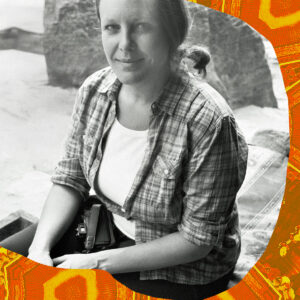 Lara L. Hill
Lara L. Hill is a documentary photographer, interdisciplinary artist, and creator of Illuminated Reportage, a practice that blends documentary photography, artistic inquiry, and systems thinking to create collaborative visual narratives. At the 2026 Guelph Jazz Festival, she is leading Chromascope, an immersive documentary project documenting François Houle’s The Secret Lives of Colour since its 2021 premiere. Drawing on more than three decades across the arts, journalism, international development, and public policy, her current projects explore agency in storytelling, aging, memory, and the evolving technologies in documentation and the arts. Learn more about her current projects here.
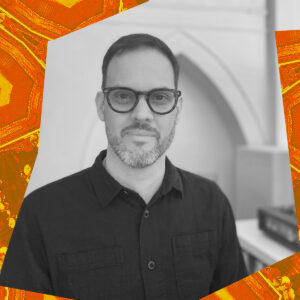
Brandon Hocura
Brandon Hocura is a filmmaker, sound artist, archivist, and scholar who works at the intersection of sound, media archaeology, material culture, and creative practice. He is the founder and creative director of the record label and publisher Séance Centre. His research on Canadian sound poetry manifests in his role as the archival director of Siren Recordings Sonic Poetry Archive. Currently, he is a postdoc researcher in the International Institute for Critical Studies in Improvisation at the University of Guelph.
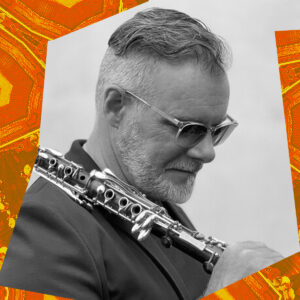 François Houle
Clarinetist François Houle has established himself as one of today’s most inventive musicians, in all of the diverse musical spheres he embraces. Inspired by collaborations with the world’s top musical innovators, François has developed a unique improvisational language, virtuosic and rich with sonic embellishment and technical extensions. He has worked with Dave Douglas, Mark Dresser, Joëlle Léandre, Benoît Delbecq, Evan Parker, Samuel Blaser, Gerry Hemingway, Marilyn Crispell, Myra Melford, René Lussier, Alexander Hawkins, John Butcher, Kris Davis, Georg Graewe, Håvard Wiik, Guillermo Gregorio, Eyvind Kang, Hasse Poulsen, and many of Canada and the International scene’s top creative music artists. His extensive touring has led to solo appearances at major festivals across Canada, the United States, Europe and Australia. A prolific recording artist, he has released over twenty recordings as a leader, earning multiple Juno Award and West Coast Music Award nominations. He is the founder of Afterday Audio, a record label dedicated to the documentation and dissemination of his many musical projects and collaborations.
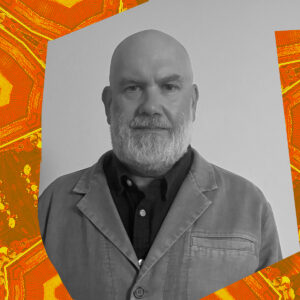 Brian Edward Jones
Brian Edward Jones (He/Him/His) is an Assistant Professor of Music Industry at Francis Marion University. Jones received his Ph.D. in American Studies from the College of William & Mary. His research interests include jazz studies, American popular music, and critical studies in improvisation. As a freelance drummer/percussionist, Jones has worked with Lonnie Holley, Gary Thomas, Mark Turner, Randy Brecker, John Abercrombie, Melissa Aldana, Jandek, René Marie, John D’earth, Darius Jones, Matthew E. White, and many others. Jones has released over twenty-five recordings on the independent label Slang Sanctuary Records.
 Kathryn Ladano
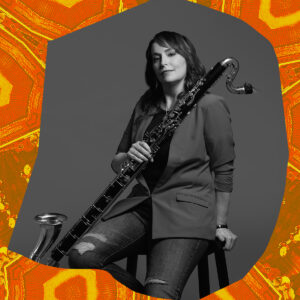
Dr. Kathryn Ladano is a Canadian bass clarinetist, educator, and scholar specializing in contemporary music and free improvisation. She is bass clarinet instructor at the University of Waterloo, formerly Artistic Director of NUMUS, and taught improvisation at Wilfrid Laurier University. Her research explores improvisation, musical communication, and disability, including her concept of The Improvising Musician’s Mask, which examines how instruments foster confidence, emotional expression, and connection through collective improvisation. She has released four albums, most recently Anatomy of the Recovering Brain (2024), and received the 2025 Rogers Women of the Year Award for Arts & Culture and the Conrad Grebel University College Alumni of Distinction Award.
 Joëlle Léandre
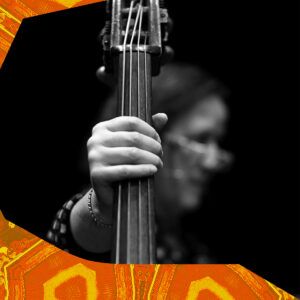
Joëlle Léandre is a French double bassist, vocalist, and composer active in new music and free improvisation. Born in Aix-en-Provence, France, Joëlle is regarded as one of Europe’s most gifted and versatile avant garde bassists. Trained in orchestral as well as contemporary music, she has played with l’Itinéraire, 2e2m, and Pierre Boulez’s Ensemble Intercontemporain. Joëlle Léandre has also worked with Merce Cunningham and with John Cage, who has composed especially for her—as have Scelsi, Fénelon, Hersant, Lacy, Campana, Jolas, Clementi, and nearly 40 other composers. As well as working in contemporary music, Léandre has played with some of the great names in jazz and improvisation, such as Derek Bailey, Anthony Braxton, George Lewis, Evan Parker, Irene Schweizer, William Parker, Barre Phillips, Pascal Contet, Steve Lacy, Lauren Newton, Peter Kowald, Urs Leimgruber, Mat Maneri, Roy Campbell, Fred Frith, John Zorn, Mark Naussef, Marilyn Crispell, India Cooke, and so many others. Joëlle has written extensively for dance and theater, and has staged a number of multidisciplinary performances. Her work as a composer and a performer, both in solo recitals and a part of ensembles, has put her under the lights of the most prestigious stages of Europe, the Americas, and Asia.

Eric Lewis
Eric Lewis is a professor of Philosophy at McGill University specializing in Black Aesthetics and the Philosophy of Improvised Arts. He is also an active improviser on brass and reeds. He helps steer in small ways the mighty IICSI ship, and as a hobby avoids academic administrative work, while running a charity Arts in the Margins, and acting as a member of Medea Electronqiue, and assorted ensembles and organizations grounded in improvisatory art practices.
 Myra Melford
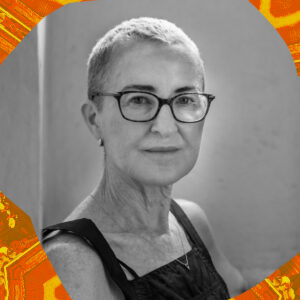
Pianist, composer, bandleader and educator Myra Melford—whom the New Yorker called “a stalwart of the new-jazz movement”—has spent the last three decades making brilliant original music that is equally challenging and engaging. Culling inspiration from a wide range of sources including Cecil Taylor, the blues and boogie-woogie of her native Chicago, the poetry of Rumi, the AACM and yoga, she’s explored an array of formats, among them ruminative solo-piano recitals, deeply interactive combos and ambitious multidisciplinary programs. Since debuting on record as a bandleader in 1990, she’s built a discography of more than 20 albums as a leader or co-leader, and has collaborated with such luminaries as Dave Douglas, Marty Ehrlich, Liberty Ellman, Erik Friedlander, Ben Goldberg, Joseph Jarman, Leroy Jenkins, Ron Miles, Nicole Mitchell, Tyshawn Sorey, Chris Speed, Stomu Takeishi, Cuong Vu and the Jazz at Lincoln Center Orchestra.

Sean Mills
Sean Mills is professor and Canada Research Chair in Canadian and Transnational History at the University of Toronto. He is the author of The Empire Within: Postcolonial Thought and Political Activism in Sixties Montreal (2010), and A Place in the Sun: Haiti, Haitians, and the Remaking of Quebec (2016). Mills is the co-editor (with Eric Fillion and Désirée Rochat) of Statesman of the Piano: Jazz, Race, and History in the Life of Lou Hooper (2023). He is a 2024 Fellow of the Pierre Elliott Trudeau Foundation. His next book, Montreal: A New History, is scheduled to be released in 2027.
 Monique Ngozi Nri
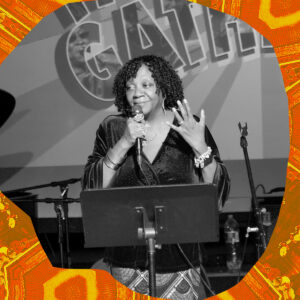
Monique Ngozi Nri, a writer of Nigerian, Barbadian, and British descent, was born in Coventry, England, raised in Nigeria until age nine, and has lived in Brooklyn, New York, for 30 years. Her work delves into her nomadic life, exploring the impact of the Biafran war, displacement, home, relationships, freedom, and feminism. She collaborates with her husband, Ahmed Abdullah, in performing music of the African Diaspora and Sun Ra, blending her poetry with song. Together they formed Melchizedek Music Productions in 1995, which has the mission of bringing music back into the community and building institutions that empower humanity. Nri, who earned her MFA in Creative Writing (poetry) from Brooklyn College in 2021, has taught in its English department. Her work has appeared in And Then, The Brooklyn Review, The Marbled Sigh, and The New York City Jazz Record. Her first book of poetry, Who We Be, was originally published in 2023. Their most recent project is Open Fortress, part of the Greenhouse Creators’ Consortium.
 Michael Palumbo
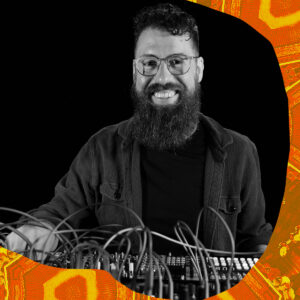
Dr. Michael Palumbo is a Toronto-based musician, concert producer, and instrument designer whose work spans experimental performance, community-building, and artist-led production. As an improvising musician, he performs microsound on a modular synthesizer in solo and ensemble contexts, and designs experimental instruments and systems that explore data, memory, and forms of distributed creativity. His electroacoustic works have been presented at venues including the Music Gallery (Toronto), the Jay Pritzker Pavilion at Millennium Park (Chicago), and SUNY Buffalo. Michael is the founder and artistic director of Exit Points, a long-running free-improvisation concert series and record label. Across his work as an organizer, educator, and performer, Michael is committed to cultivating inclusive creative ecosystems where artists and administrators can take risks and develop sustainable long-term practices.

Désirée Rochat
Dr. Désirée Rochat is a historian of knowledge and a long-time community educator and memory worker. Her areas of interest include activism, knowledge work, Black community formation, the Black Atlantic, community and activist archives, and oral history. She holds a PhD in Educational Studies from McGill University. Her transdisciplinary approach bridges historical research, community archiving and popular pedagogy. Her research centres on the activism of Black Canadian, African American, and Black Caribbean communities in Quebec during the 20th century, focusing on knowledge practices and intellectual history. Her most recent project looks at the emergence of the street dance scene in the context of Black cultural activism in Montreal in the 1970s. Dr. Rochat also works to preserve community and activist archives. Her project “Black lives in/and archives” fosters an archival ecosystem dedicated to preserving and activating the archives of Black Montreal through collaborative activities. Her publicly engaged pedagogy re-activates histories contained in Black archives, to make both more accessible. With historians Sean Mills and Eric Fillion she co-edited Statesman of the Piano: Jazz, Race, and History in the Life of Lou Hooper.
 Simon Patrick Rogers
Simon Patrick Rogers is the special collections archivist at the John M. Kelly Library, University of St. Michael’s College in the University of Toronto. He is also a co-founder of TINI, the Toronto Information Network of Independent Music Cooperative, a community-based project to improve documentary heritage archiving of independent music. He is an active volunteer, occasional instructor in bibliography and print culture in the Book and Media Studies program, and has written on diverse topics including archives, municipal history, rare books, architecture, music, literature and the field of monetary appraisal.
Curtis Sassur
Curtis Sassur is Head of Archival & Special Collections at the University of Guelph’s McLaughlin Library. As an archivist and member of the archival community, he is interested in the ways archives can support cultural memory, artistic communities, and collaborative forms of stewardship. He is a co-founder of the Toronto Information Network for Independent (TINI) Music Co-op, which strives to work with artists, fans, venues, and collectors to document and preserve the histories of independent music. His research and professional practice focus on the monetary appraisal of archival records, community archives, and approaches that balance preservation with local agency and ownership.
Georgia Simms
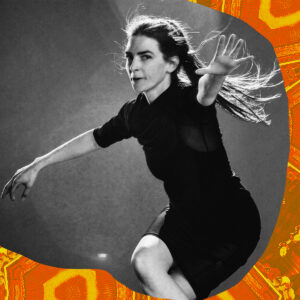
Georgia Simms (she/her) is a Guelph-based dance artist and choreographer who has performed nationally and internationally. She hosts classes in contemporary modern dance technique, improvisation, and collaborative composition for adults and youth. Her practice of “ecstatic survival” with Dancetheatre David Earle is ongoing. Currently a PhD student with the International Institute for Critical Studies in Improvisation at the University of Guelph, her dissertation studies investigate improvisational encounters with embodied, choreographic archives, and value acts of relationality in remembering.
Jesse Stewart
Jesse Stewart is a composer, improviser, percussionist, artist, educator, and scholar whose interdisciplinary practice spans music, visual art, installation, and community-engaged research-creation. His work has been documented on more than twenty recordings, including Stretch Orchestra’s self-titled debut album, which received the 2012 Juno Award for Instrumental Album of the Year. He has published on subjects including improvisation, jazz, hip hop studies, accessibility, and community music. Widely commissioned as a composer and artist, he founded We Are All Musicians (WAAM) in 2012 to make collaborative music-making as broadly accessible as possible. He is currently Head of the Music program at Carleton University.


